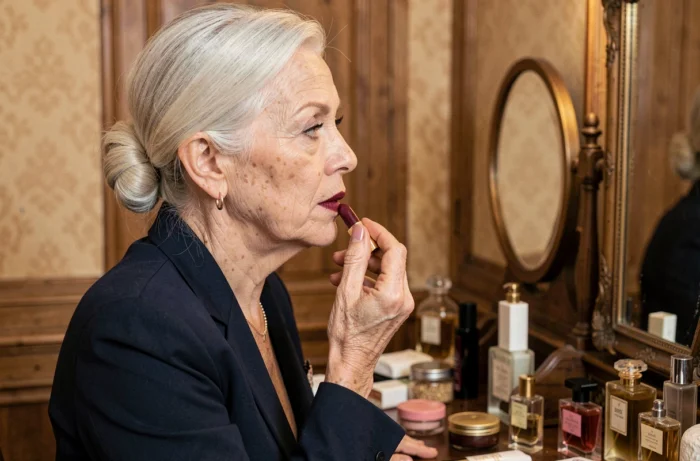
The loss of definition in the vermilion border and chronic lip dehydration after 70 dramatically change how pigments behave on the lip mucosa. Formulas that worked at 50 migrate, settle into fine lines around the mouth, and accentuate the crepey appearance of the lip contour. Adapting your lipstick routine to this physiological reality requires precise technical adjustments, not just a change of shade.
Pigment migration and fine lines around the mouth: the real technical challenge
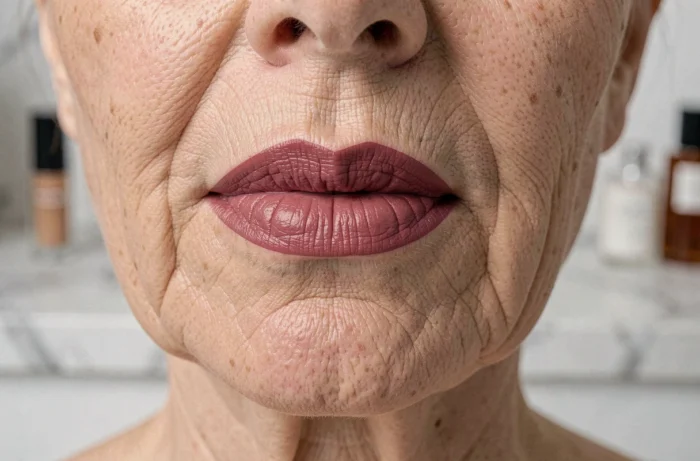
On mature lips, pigment does not stay in place. The loss of collagen and elastin creates tiny vertical lines around the mouth, and any runny or overly oily formula seeps into them through capillary action. This is known as “feathering,” and it is made worse by the loss of volume around the lip contour.
Applying a creamy lip liner before lipstick creates a physical barrier. This is not an optional beauty step: lip liner contains the color and limits its migration into fine lines. Using short strokes along the natural lip line, without going more than half a millimeter beyond it, is enough to recreate a clean boundary between the lip mucosa and the skin.
For truly effective wear, the liner shade should exactly match the lipstick or be within half a shade of it. A liner that is too dark creates a visible, dated outline; one that is too light will not hold the color in place.

Textures for mature lips: tinted balm, satin or cream
Long-wear matte formulas are best avoided. A matte texture accentuates every fine line and dries out the lip mucosa within a few hours. On lips that are already dehydrated, the result looks like cracked plaster.
The best textures fall into three categories, each suited to different needs:
- Tinted balm leaves a sheer wash of color with a moisturizing base (shea butter, mineral oil, petroleum jelly). Maximum comfort, subtle pigmentation, ideal for everyday wear.
- A satin formula offers a balance between coverage and flexibility. Its slightly glossy finish catches the light and creates the impression of fuller lips without feeling sticky.
- A cream texture provides fuller coverage and works well for occasions when you want a more vivid color. It requires careful lip-liner application to prevent smudging.
Glittery or highly shimmery finishes draw attention to skin texture rather than color. A natural satin finish is the best choice for a polished look. You can absolutely choose a natural pink lipstick for mature skin without sacrificing staying power, as long as you check the formula for moisturizing ingredients.
Lipstick colors after 70: how your skin’s undertone guides your choice
Choosing a color is not just a matter of personal taste. Your skin’s undertone (warm, cool or neutral) determines which shades brighten your face rather than make it look dull. A blue-based red on warm undertones can make the complexion look gray. An orangey pink on cool undertones creates a mismatch that can look aging.
Shades that tend to work well on mature skin:
- Warm undertones: salmon pink, soft coral, muted brick red.
- Cool undertones: raspberry pink, rosy mauve, cherry red.
- Neutral undertones: nude pink, dusty rose, classic red that is neither too blue nor too orange.
A full nude shade (almost identical to your skin tone) can make your lips disappear and leave you looking tired. It is better to choose an “enhanced” nude—one or two shades deeper than your natural lip color—to maintain definition.
Bright red is still an option
A bold red on 70-year-old lips is not a fashion faux pas. The key is technical, not aesthetic: choose a creamy formula, use a matching liner, and apply by tapping it on with your finger rather than making one firm swipe straight from the tube. This method deposits less product, reducing the risk of migration while preserving the color’s intensity.
Lip preparation and sun protection: the essentials makeup cannot replace
No lipstick can correct dehydrated or irritated lip mucosa. Lip preparation determines how well makeup wears and looks. Applying a fragrance-free balm made with petroleum jelly or shea butter about 15 minutes before lipstick smooths the surface and nourishes the lips without leaving a greasy film that could make the pigment slip.
The American Academy of Dermatology recommends avoiding balms that cause tingling or burning. These sensations are not signs that a product is working; they indicate irritation. On lips made more fragile by age, this reaction can worsen chapping and prevent lipstick from adhering properly.
Lip SPF: a separate part of your routine
Protecting your lips from the sun is a skincare step, not a beauty step, but it directly affects the condition of the surface on which makeup is applied. The AAD recommends using a balm with an SPF of at least 30, reapplying every two hours outdoors, even in cloudy or cold weather. Lips protected from photoaging retain their suppleness and natural volume for longer.
You can apply lipstick over an SPF balm, as long as you wait for the balm to absorb. Regular lipstick offers no UV protection: color does not protect the lip mucosa.
The most effective routine comes down to three layers: SPF balm, lip liner, then cream or satin lipstick. Each layer serves a distinct purpose (protection, containment, color), and none can replace another. Lip makeup applied to a healthy, protected base lasts longer and is less likely to feather, whatever the product costs.