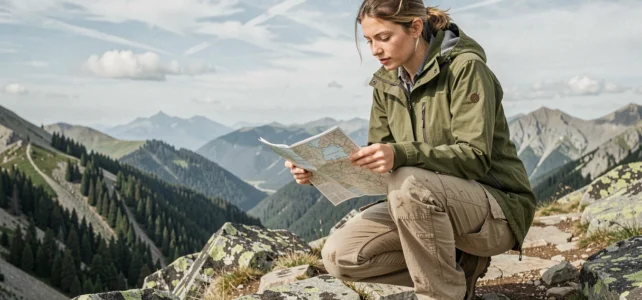
Outdoor sports are attracting an increasingly broad audience in France. Hiking is the most practiced physical activity, with about 35% of French people reporting that they engage in it according to Union Sport & Cycle. Trail running has seen accelerated democratization since 2024, driven by a marked increase in female participants. These trends are reshaping the landscape of outdoor activities, well beyond organized stays for children.
Hiking, trail running, and mountain biking: profiles of participants and recent dynamics
| Activity | Dominant Audience | Trend since 2021 | Beginner Accessibility |
|---|---|---|---|
| Hiking / leisure walking | 18-49 years, all conditions | Strong increase, the leading physical activity in France | Very accessible |
| Trail running | 25-45 years, notable female progression | Record growth, over 80% more female outings on Strava | Average (physical condition required) |
| Mountain biking | Families and experienced athletes | Stable, supported by the development of marked trails | Variable depending on terrain |
| Canoeing / river descent | Families, groups of friends | Seasonal, strong in summer | Accessible on guided routes |
This table summarizes the main points, but the differences between disciplines deserve closer examination. Hiking dominates in terms of participant volume. Trail running, on the other hand, is progressing due to the intensity of its growth.
Resources like expnature.be help identify routes suitable for every level, whether you are starting with Nordic walking or preparing for your first mountain trail.
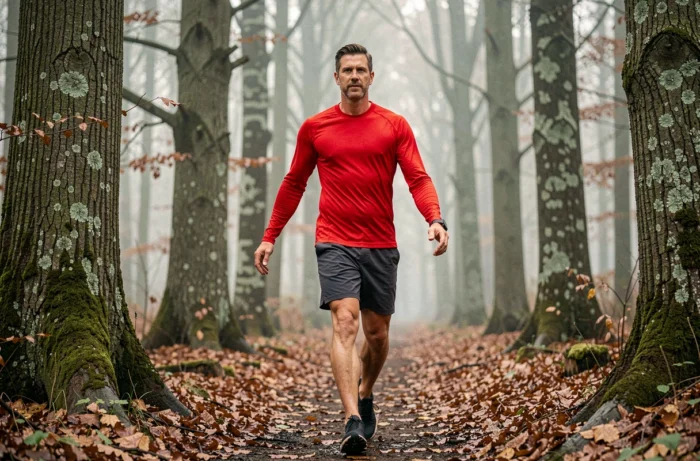
Trail running in France: a growth that changes the game
Trail running is no longer just a niche for seasoned mountain runners. Strava data analyzed between 2024 and 2026 shows a very strong increase in the number of trail runners, with an unprecedented gender balance.
The increase in outings recorded by women exceeds 80% during the reference period. This figure reflects a structural change, not just a passing trend.
What explains this acceleration
- The proliferation of short races (between 10 and 25 km) lowers the entry threshold for beginners, where trail running was previously limited to ultras and demanding mountain formats.
- Nature running clubs are developing in suburban areas, making the practice accessible without long travel.
- Equipment has become more accessible: brands offer quality entry-level ranges, reducing the cost of access compared to the early years of trail running in France.
However, practicing independently on unmarked trails raises safety and regulatory questions. A mayor has the police power to restrict access to certain natural areas, which can surprise occasional participants.
Outdoor activities for families: canoeing, mountain biking, and nature stays
Families represent a driving force for attendance at organized activities. Canoeing and river descent remain safe bets in the departments of Tarn, Aveyron, or Loire, where providers offer routes suitable from the age of six or seven.
Mountain biking in collective youth accommodation follows a precise regulatory framework. Supervision requires specific qualifications, and the choice of routes must consider the actual level of participants. Animation structures organizing mountain biking outings for groups of children must comply with detailed supervision standards, including on protective equipment.
Nature stays in villages or countryside
Multi-activity stays in the countryside often combine hiking, wildlife discovery, and white-water sports. The villages of Aveyron or Tarn provide a conducive setting, with marked trails and accessible rivers.
Swimming in natural environments as part of a collective stay is subject to strict supervision obligations. Recent parliamentary questions on this topic show that regulation remains a point of vigilance for organizers.
Regulation of outdoor sports: what participants often overlook
Access to natural spaces is not an absolute right. A municipal order can temporarily prohibit the practice of certain outdoor sports at a given site for safety or environmental protection reasons.
A July 2026 order modified several provisions related to the supervision of outdoor sports activities. Organizers of nature stays and activities must verify the regulatory compliance of their services before each season.
For individual participants, the question arises differently. A hiker or trail runner using a communal path may be denied access without notice if an order has been issued. Consulting municipal orders before planning an outing in unknown terrain is an underestimated precaution.
Recreational areas and facilities in nature
The development of a recreational area in a natural zone is subject to urban planning restrictions. Authorizations vary depending on the classification of the land and the type of activity planned. Land classified as a natural area does not allow the same installations as land in agricultural or buildable zones.
The practice of outdoor sports in France relies on a balance between accessibility and supervision. Hiking and trail running illustrate a broader trend towards autonomous and massive practices. Organized activities (canoeing, mountain biking, collective stays) remain subject to a regulatory framework that evolves regularly. Checking access and supervision conditions before any outing remains the most useful reflex, whether you are going alone on a trail or in a group on a river.