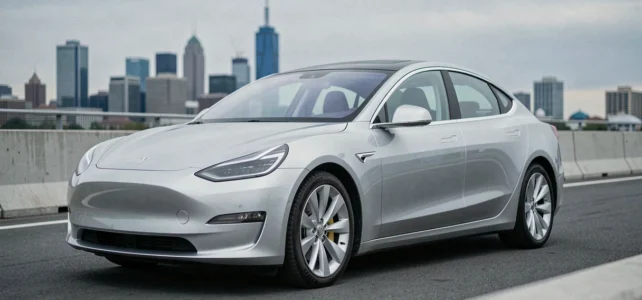
How to measure the ongoing transformation in the automotive industry when regulations, technologies, and consumer expectations are shifting simultaneously? Two structural axes allow us to gauge the phenomenon: the rise of electrification in the European market and the entry into force of the Euro 7 standard, which redefines the technical constraints for all types of powertrains, including electric vehicles.
Euro 7 Standard and Battery Requirements: What Regulation 2024/1257 Changes in Practice
Most analyses of automotive trends focus on sales volumes or announcements of new models. Regulation (EU) 2024/1257, known as Euro 7, introduces a different kind of change: for the first time, European regulation imposes minimum durability thresholds for the batteries of new electric and plug-in hybrid vehicles.
These obligations will apply to new models approved from November 2026. They do not concern vehicles already in circulation.
| Criterion | Threshold at 5 years or 100,000 km | Threshold at 8 years or 160,000 km |
|---|---|---|
| Minimum residual battery capacity | 80 % | 72 % |
| State of health (SOH) indicator on the dashboard | Mandatory | Mandatory |
The obligation to display a state of health (SOH) indicator directly on the dashboard establishes a new standard of transparency. For the used car market, this data makes the residual value of an electric vehicle measurable, where the buyer previously had to rely on rough estimates.
To delve deeper into the major automotive trends and their medium-term implications, a cross-reading of regulatory data and market figures allows us to go beyond mere manufacturer announcements.
Brake Particles: A Regulatory Constraint Affecting Electric Vehicles as Well
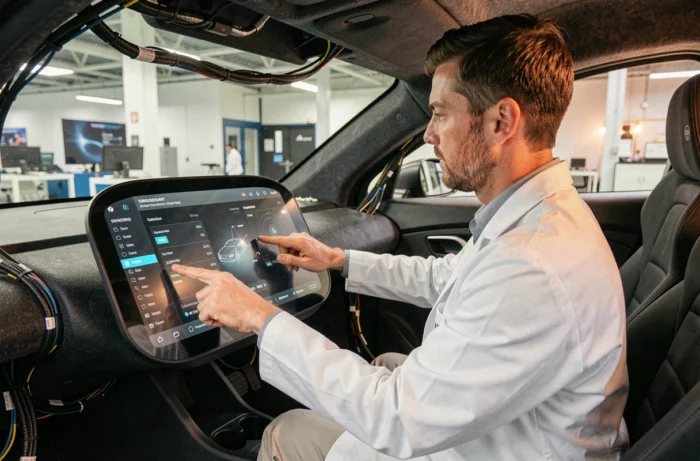
Euro 7 is not limited to exhaust emissions. The regulation introduces for the first time in Europe regulatory thresholds for brake particles, an aspect often absent from summaries on automotive pollution.
| Type of Vehicle | Brake Particle Ceiling (Entry into Force) | Target Value from 2035 |
|---|---|---|
| Thermal and Hybrid | 7 mg/km | 3 mg/km |
| Electric | 3 mg/km | 3 mg/km |
Electric vehicles benefit from regenerative braking, which reduces wear on the pads. Their starting ceiling is therefore already set at the level that thermal vehicles will have to reach by 2035.
However, this constraint requires suppliers to rethink the composition of braking materials for the entire automotive supply chain, including entry-level models where margins are already under pressure.
Electrification of the European Market: Understanding Penetration Dynamics
The European market for new vehicles is crossing a threshold in electrification. By the first half of 2026, about one in four new vehicles sold in Europe will be electric. This proportion marks an acceleration compared to previous years.
Three factors explain this dynamic:
- The tightening of emission standards (Euro 7, European CO2 targets) pushes manufacturers to shift their ranges towards electric to avoid regulatory penalties.
- The gradual decrease in battery costs makes electric models competitive in certain segments, even without direct purchase subsidies.
- The pull effect of corporate fleets, subject to greening criteria in several European countries, boosts registrations of battery vehicles.
This progress remains uneven across countries. Northern European markets show penetration rates significantly higher than those in Southern Europe, where charging infrastructure and purchasing power hinder adoption.
Software-Defined Vehicle: A Change in the Business Model for the Automotive Industry
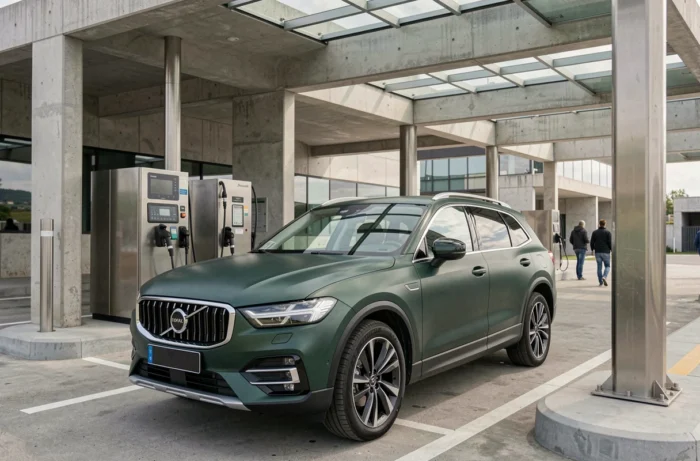
The concept of a software-defined vehicle (SDV) transforms the relationship between manufacturers, suppliers, and owners. In this model, the vehicle’s functionalities no longer depend solely on the hardware installed at the time of sale, but on software layers updated remotely.
For the automotive industry, this shifts value creation: recurring revenues from connected services, paid updates, and vehicle data exploitation become a strategic axis, alongside the margin on the initial sale.
This transition generates tensions in the supply chain. Subcontractors specializing in mechanical components must invest in software skills, or risk seeing their share of value diminish in favor of technology companies. Mastering vehicle data becomes a competitive issue as crucial as manufacturing quality.
Cybersecurity and personal data protection issues add a layer of regulatory complexity. In France, as in the rest of the European Union, manufacturers must reconcile software innovation with compliance with GDPR, which slows down certain deployments.
Automotive Supply Chain: Robustness and Traceability as New Criteria
The logistical disruptions of recent years have highlighted the fragility of automotive supply chains. The response no longer solely involves the geographical diversification of suppliers but also the integration of traceability technologies at every link.
Regulatory compliance requirements (battery material traceability, ESG reporting, vehicle digital passports) compel companies in the sector to document the origin and journey of components. Traceability becomes a regulatory obligation, not a competitive advantage.
Real-time data collected in factories (Smart Factory) allows for anticipating disruptions and adjusting production. For subcontractors, the ability to provide this data to their clients now conditions access to tenders from major manufacturers.
The European regulatory framework on battery sustainability, brake particles, and component traceability leaves no gray area. Manufacturers and their suppliers who do not adapt their processes by the end of 2026 will face increased homologation costs and restricted access to the European market.