A complete padel court six months after its opening, trampoline parks that turn people away on weekends, cycling studios where you book your spot three days in advance: the passion for sports is no longer experienced as it was ten years ago. Formats are changing, locations are multiplying, and the budget we allocate is increasing as well. Understanding these shifts allows for better choices about where to invest energy, time, and money.
Commercial sports leisure: a sector that is scaling up
This phenomenon is rarely discussed in motivational guides, yet it is redefining daily practice. Commercial sports leisure (Ninja courses, private padel courts, specialized studios, obstacle runs) has been experiencing double-digit growth for several years, according to a study conducted by the Banque de France for Active-FNEAPL.
This shift has direct consequences. The cost of a session in a cycling studio or a trampoline park far exceeds the annual fee of a community club. You pay per session, book a time slot, and consume sports like you would a cultural leisure activity.
For regular practitioners, this forces a decision. A monthly subscription at a specialized gym can absorb the equivalent of several federation licenses. The resources available on mordudesport.fr help compare disciplines and guide choices based on budget and goals.
The downside of this trend: a more pronounced social segmentation. Not everyone has access to the same offerings, and rural areas often remain excluded from these new formats.

Training and recovery: what the field really demands
Everywhere you read that you need to vary your sessions, alternate cardio and strength training, and plan rest days. On paper, it’s clear. In practice, most amateur athletes chain workouts without any real structure, then stop abruptly when pain appears.
Structuring without rigidifying
The classic trap is copying a program from a professional athlete. Four sessions a week with calibrated intensities works when that’s all you have to manage. For someone who works, has children, and sleeps poorly some nights, adapting the volume to real fatigue matters more than following a fixed plan.
A simple indicator: the quality of sleep. If you sleep less than six hours or wake up feeling tired, adding a high-intensity session the next day is counterproductive. Better to go for a brisk walk or a mobility session.
Active recovery versus passive recovery
Recovery isn’t just about staying on your couch. Opinions vary on this point, but several approaches yield concrete results:
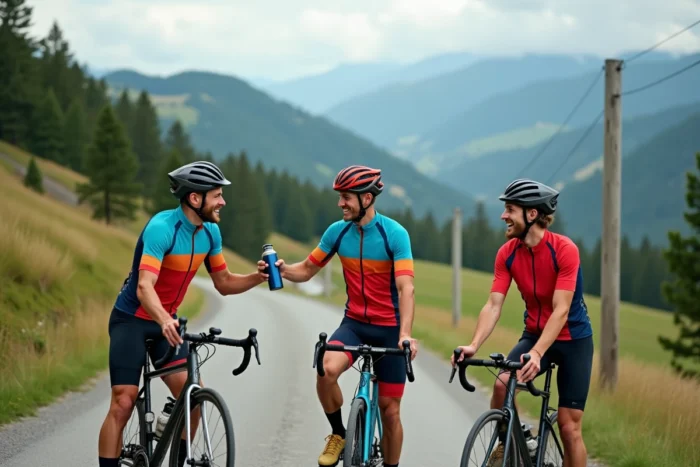
- Low-intensity cycling for twenty to thirty minutes the day after a tough session, to boost circulation without stressing tired muscle fibers
- Dynamic stretching (not static) at the end of the day, which maintains joint range without creating additional micro-injuries
- Cold water immersion after prolonged exertion, which reduces local inflammation, provided it’s not used systematically to avoid limiting muscle adaptations
Choosing a sports club: the criteria that matter on the field
Joining a club remains the most reliable way to maintain regular practice. The collective dimension, time commitment, and the gaze of others: all of this creates a framework that an open-access gym does not replicate. However, it’s essential to choose the right club.
The atmosphere is more important than the equipment. A club with an average court but a close-knit group and an attentive coach produces better results than a state-of-the-art facility where no one talks to each other. Before signing up, it’s beneficial to attend two or three trial sessions, not just one.
Time slots also deserve special attention. A club that offers training only in the evening is not suitable for someone who finishes work at 9 PM. Checking real compatibility with your schedule helps avoid dropping out after two months.
- Ask about the license renewal rate from year to year: a club where most members return each season is a good sign
- Check the qualifications of the coaching staff, especially for joint-risk sports (fitness, weightlifting, combat sports)
- Inquire about the policy for welcoming beginners: some competition-oriented clubs do not have a leisure section, which can quickly discourage newcomers
Public sports events: formats in transition
The CNOSF has announced that the “Sentez-Vous Sport” initiative is evolving into a new format called “Septembre Bouge”, with a broader ambition to reach audiences distant from practice. This type of free event allows participants to try several disciplines in one day, without commitment.
For those hesitating between several sports, these days offer a valuable shortcut. You can go from a fencing workshop to a padel class and an archery initiation in just a few hours, with provided equipment and qualified instructors.
The UFOLEP also organizes summer tours like the Playa Tour, which combines sports, solidarity, and accessibility across the territory. These events do not replace regular practice, but they create a spark that reading an article will never ignite.
The choice of a sport, a club, or a practice format depends on very personal constraints: budget, geography, availability, physical level. Testing before committing remains the most reliable method, whether through a free event, a trial session at a club, or a first class in a private studio. The offer has never been so wide, making the selection all the more necessary.